
There was much cause for optimism in our annual look at women in business through the International Business Report (IBR). The survey reveals that the proportion of women in senior management roles has climbed to 24% (up from 21% in 2012), back up to levels seen before the financial crisis.

The outlook has improved somewhat since the ANC’s Manguang conference at the end of last year. It is encouraging for business leaders to see the adoption of the national development plan, with various measures to tackle unemployment, poverty and inequality.
I confess to being somewhat surprised when I first saw the most recent data from our International Business Report (IBR), revealing that the number one recruitment challenge for business leaders is a lack of key technical skills in candidates.
On 18 January, the National Bureau of Statistics in China revealed that the economy’s working-age population shrank by 3.45m in 2012.
The United Kingdom Prime Minister, David Cameron, today set out a path by which the country could leave the European Union by 2017.
The big New Year business story was that politicians in the United States had pulled the economy back from the brink of the ‘fiscal cliff’, albeit slightly later than planned.
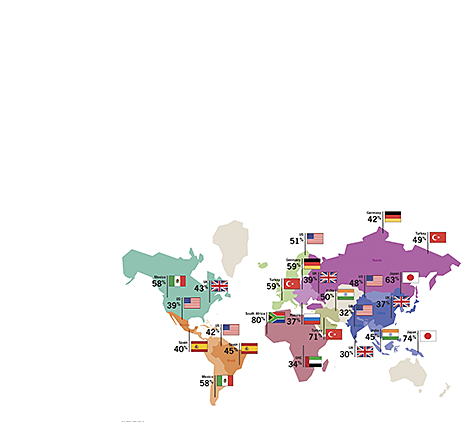
On the one hand, the results from our once-every-two-years look at the world’s leading emerging markets were encouraging. Business leaders across the world are looking at international expansion opportunities.
Your questions answered by Nigel Davies, your questions answered by Nigel Davis
Monday night’s news that international lenders had reached an agreement on how to remedy Greece’s bailout programme, thereby releasing a delayed €34.4bn aid payment, was an important step for the future of the eurozone. But as the crisis drags on and growth rates continue to disappoint, the cost to businesses keeps on rising.
On Thursday of last week, I chaired a panel of leading figures from the PE industry – including Paul Canning (HIG Capital Europe), David Whileman (3i), Franceso di Valmarana (Pantheon) and my colleague Mo Merali (Grant Thornton UK) – to launch our 2012 Global Private Equity report: ‘The search for growth’.
The Philippine economy is growing fast. GDP expanded by 6.8% in 2012 and, whilst remittances climbed to a record high of US$23.8 billion in 2012, their share of GDP actually dropped to 8.5%, down from 9% in 2011.
One of the most interesting aspects of our recent Global Dynamism Index (GDI) was the strong performance of mature economies. It was a result Ed Nusbaum described as counterintuitive in that the word dynamism tends to be attributed to faster growing emerging markets such as the BRIC economies.
The London 2012 Olympic and Paralympic Games were widely regarded as a huge success. Spectators, officials and competitors alike praised not just the efficiency of organisation, but the spirit in which the games were held.
The global economy is going through a very difficult phase. Growth in key emerging markets such as China, Brazil and India is slowing. In the United States, the economy seems to be treading water as everyone waits for the presidential elections in November, despite the looming ‘fiscal cliff’.