The second quarter of 2014 brought a raft of very cheery economic news. The pace of growth in China kicked back up to 7.5% following a mini-stimulus from the government which included speeding up infrastructure project approvals, tax relief and credit easing. The United States roared back after a particularly bitter winter to post 4.0% growth (at the annual rate). Spain was buoyed by news that growth had accelerated to 0.6% (from the previous quarter) and the unemployment rate has started to fall.
Dynamic organisations need to apply both reason and instinct when making business decisions is the cornerstone of our 2012 advertising campaign.
Last week, the International Labour Organisation (ILO) released their annual World of Work report. It contains some stark warnings, particularly for mature economies where it does not expect employment levels to return to pre-crisis levels before 2017. Getting people back into work, the report says, will be a “major global challenge” for years to come and the threat of “social unrest” a major risk.
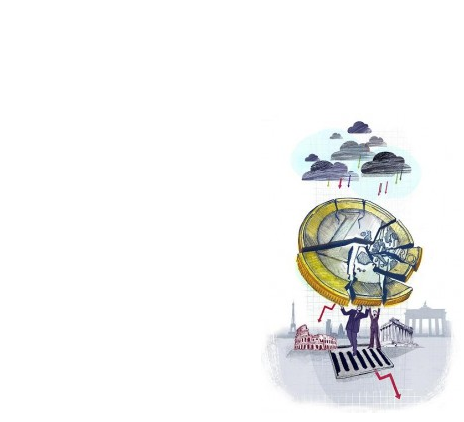
Writing our recently released Future of Europe report, the thing that stood out to me most was the divergence of business opinion on how to handle the eurozone crisis. And not just between the 17 euro ‘ins’ and the 10 euro ‘outs’ – which you might expect – but a split right at the heart of Europe.
The Q1 IBR economic update contained a major surprise: For the first time, not one of the BRIC economies made it into the top five for business optimism.
On 18 January, the National Bureau of Statistics in China revealed that the economy’s working-age population shrank by 3.45m in 2012.
The United Kingdom Prime Minister, David Cameron, today set out a path by which the country could leave the European Union by 2017.
The big New Year business story was that politicians in the United States had pulled the economy back from the brink of the ‘fiscal cliff’, albeit slightly later than planned.
Your questions answered by Nigel Davies, your questions answered by Nigel Davis
Monday night’s news that international lenders had reached an agreement on how to remedy Greece’s bailout programme, thereby releasing a delayed €34.4bn aid payment, was an important step for the future of the eurozone. But as the crisis drags on and growth rates continue to disappoint, the cost to businesses keeps on rising.
The Philippine economy is growing fast. GDP expanded by 6.8% in 2012 and, whilst remittances climbed to a record high of US$23.8 billion in 2012, their share of GDP actually dropped to 8.5%, down from 9% in 2011.
One of the most interesting aspects of our recent Global Dynamism Index (GDI) was the strong performance of mature economies. It was a result Ed Nusbaum described as counterintuitive in that the word dynamism tends to be attributed to faster growing emerging markets such as the BRIC economies.
The London 2012 Olympic and Paralympic Games were widely regarded as a huge success. Spectators, officials and competitors alike praised not just the efficiency of organisation, but the spirit in which the games were held.
The global economy is going through a very difficult phase. Growth in key emerging markets such as China, Brazil and India is slowing. In the United States, the economy seems to be treading water as everyone waits for the presidential elections in November, despite the looming ‘fiscal cliff’.